

Have you ever pulled into a parking lot and wondered why some parking lines are white, others are blue, and some areas are painted red or yellow? Most drivers recognize that the colors mean something, but unless you work in parking lot maintenance, property management, or traffic safety, the details can get blurry fast.
Parking lot striping colors aren’t random. They’re used to organize traffic flow, improve safety, support ADA accessibility, and help drivers quickly understand where they can — and cannot — park.
As a parking lot striping company in Phoenix, we spend a lot of time thinking about pavement markings, curb paint, and parking lot layouts. So we put together this guide explaining the most common parking lot line colors and what they typically mean in Arizona.
TL;DR
- White lines = standard parking spaces and traffic markings
- Yellow lines = traffic flow, no parking zones, or separation areas
- Blue markings = ADA accessible parking spaces
- Red markings = fire lanes, emergency access, or no parking areas
- Green markings = limited-time parking (less common)
White Parking Lot Lines
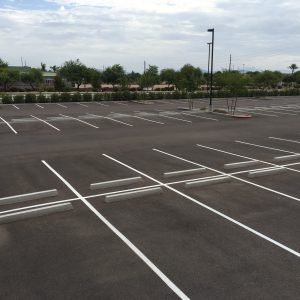
White is the most common parking lot line color you’ll see in Arizona parking lots. These markings are typically used for:
- Standard parking stalls
- Directional arrows
- Crosswalk markings
- General traffic guidance
- Space dividers
If you pull into a grocery store, office complex, retail center, or medical plaza, there’s a good chance most of the parking lot striping is white.
White lines help create organization and maximize parking efficiency while keeping traffic moving safely throughout the lot. Clear white striping is especially important in Phoenix because intense UV exposure and heat can fade pavement markings quickly over time.
Faded white lines can create confusion, reduce parking capacity, and make a property appear poorly maintained.
Yellow Parking Lot Lines
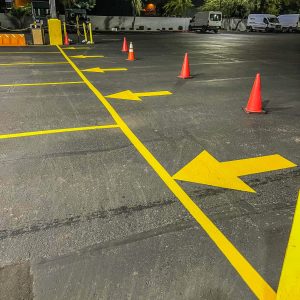
Yellow pavement markings are generally used to direct traffic and identify restricted areas. In parking lots, yellow lines commonly indicate:
- Two-way traffic lanes
- Medians or divider areas
- No parking zones
- Loading and unloading areas
- Areas drivers should keep clear
Yellow is used because it naturally grabs attention and signals caution. You’ll often see yellow striping near loading docks, drive lanes, dumpster enclosures, and areas where vehicle movement needs to stay unobstructed.
In larger commercial parking lots throughout Phoenix, yellow markings also help separate opposing traffic directions and improve visibility for drivers navigating busy areas.
Blue Parking Lot Markings

Blue markings are associated with ADA-accessible parking spaces. These spaces are reserved for individuals with disabilities and must meet specific accessibility standards under the Americans with Disabilities Act (ADA).
Blue parking lot markings often include:
- Accessible parking stalls
- Access aisles beside ADA spaces
- Wheelchair symbols
- ADA curb ramps
- Van-accessible designations
These markings are critical for accessibility and safety. Parking in an ADA-designated space without proper authorization can result in significant fines.
For property owners, maintaining visible ADA striping is also important for compliance. Faded or improperly marked accessible spaces can create legal and safety concerns.
Because Arizona sun exposure can wear down blue paint quickly, many parking lots require periodic restriping to keep ADA markings visible and compliant.
Red Parking Lot Markings
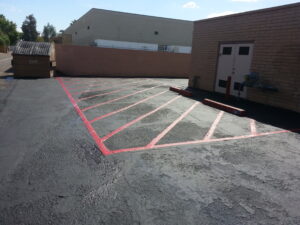
Red markings almost always indicate areas where parking is prohibited.
These areas may include:
- Fire lanes
- Emergency access zones
- Fire hydrant clearance areas
- Emergency vehicle routes
- Safety clearance zones
Red curb paint and red striping are designed to stand out immediately because these areas need to remain clear at all times.
Parking in a red-marked zone can create safety hazards and may result in towing or citations. In commercial properties, properly maintained fire lane striping also helps emergency responders access buildings quickly when needed.
Many municipalities and fire departments have specific requirements for fire lane markings, including wording, dimensions, and paint colors.
Green Parking Lot Lines
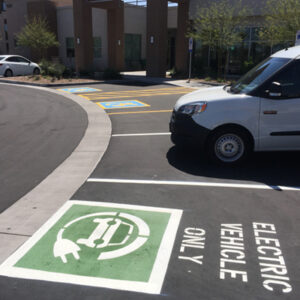
Green parking lot markings are less common in Arizona but are sometimes used for:
- Short-term parking
- Limited-time parking spaces
- Special permit parking
- Eco-friendly or electric vehicle parking areas
The exact meaning can vary depending on the property or municipality, so it’s always important to check nearby signage.
Because green markings are less standardized than white, yellow, blue, or red, they’re usually paired with posted instructions explaining the parking restrictions.
Why Parking Lot Line Colors Matter
Parking lot striping does more than improve appearance. Clear, properly colored pavement markings help:
- Improve traffic flow
- Increase parking efficiency
- Reduce driver confusion
- Improve pedestrian safety
- Support ADA accessibility
- Help properties stay compliant with local regulations
In Phoenix, pavement markings also take a beating from heat, sun exposure, dust, and heavy traffic. Over time, faded striping can make even a well-maintained property look neglected.
Whether you’re a driver trying to avoid a ticket or a property owner maintaining a commercial lot, understanding parking lot line colors makes navigating parking areas much easier.
Straight Striping is Phoenix, Arizona’s Go-To for Parking Lot Line Striping and More
Most people don’t think much about parking lot striping until they can’t figure out where to park or until they accidentally stop in a fire lane.
But those colors play an important role in keeping parking lots organized, accessible, and safe.
From white parking stall lines to blue ADA markings and red fire lanes, every color communicates important information to drivers. Understanding what those colors mean can help you avoid fines, improve safety, and better navigate parking lots throughout Arizona.


Comments are closed