
Warehouses, distribution centers, manufacturing facilities, and industrial workspaces are filled with brightly colored floor markings designed to keep operations safe, organized, and efficient. From yellow forklift lanes and pedestrian walkways to red hazard zones and green safety areas, these markings help employees quickly understand how to safely navigate busy industrial environments.
These colors aren’t just there to make a warehouse look organized. Warehouse floor marking colors are used to improve safety, direct traffic flow, identify hazards, support OSHA compliance, and reduce workplace accidents. In facilities where forklifts, machinery, inventory, and employees constantly move through shared spaces, clear floor striping plays a major role in maintaining both safety and productivity.
As a warehouse floor striping company in Phoenix, Straight Striping works with warehouses and industrial facilities throughout Arizona to create durable, highly visible floor marking systems. Understanding what these colors mean can help facility managers, employees, and business owners maintain safer and more efficient work environments.
TL;DR
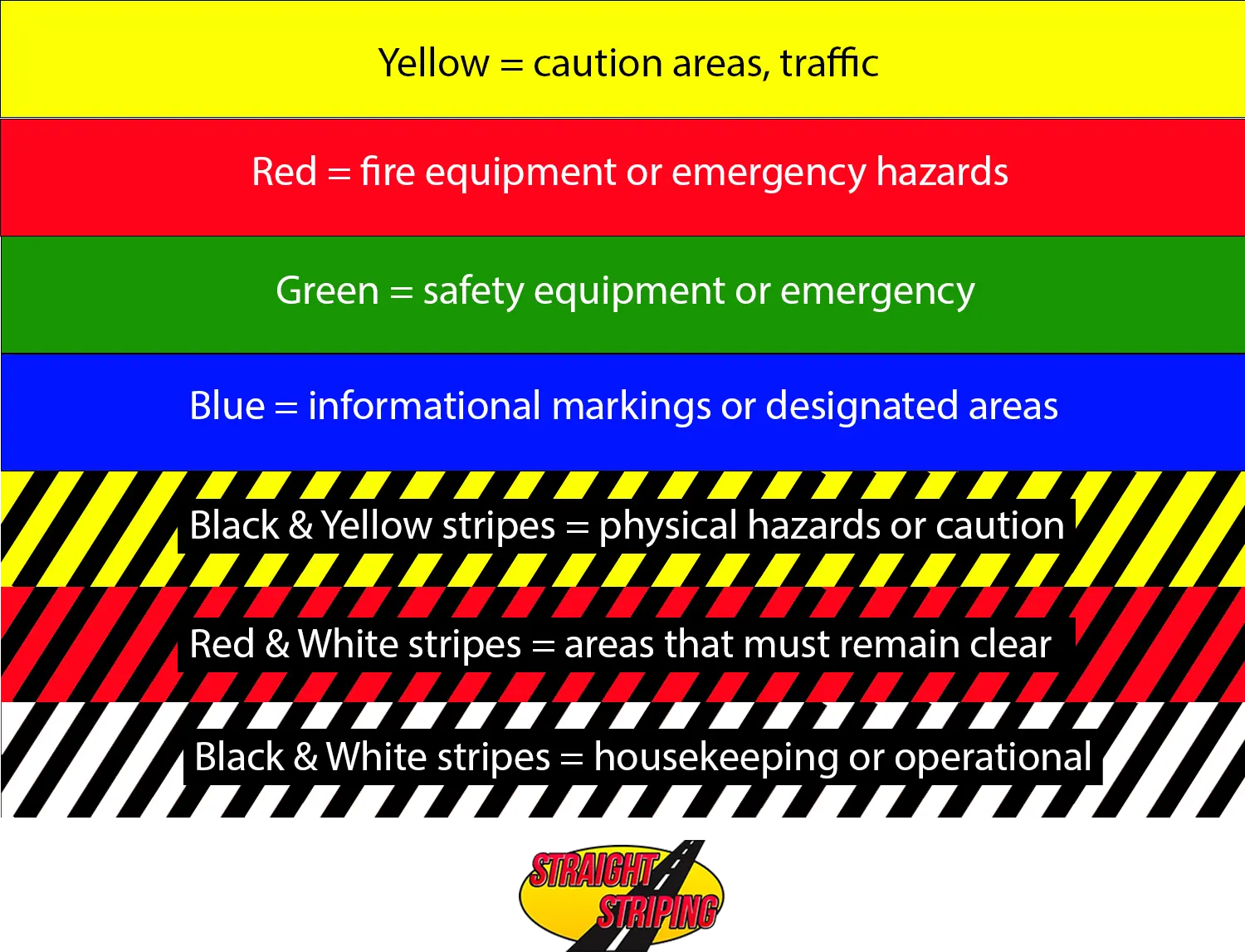
- Yellow = caution areas, traffic lanes, pathways
- Red = fire equipment or emergency hazards
- Green = safety equipment or emergency egress
- Blue = informational markings or designated areas
- Black & Yellow stripes = physical hazards or caution zones
- Red & White stripes = areas that must remain clear
- Black & White stripes = housekeeping or operational boundaries
Why Warehouse Floor Markings Matter
In warehouses and industrial facilities, organization about efficiency as much as it’s about safety.
Warehouse floor striping helps facilities:
- Separate pedestrian walkways from forklift traffic
- Identify hazardous areas
- Mark emergency exits and equipment
- Improve workflow and organization
- Reduce workplace accidents
- Support OSHA safety compliance
Without clear floor markings, warehouses can quickly become confusing and dangerous, especially in high-traffic environments with constant movement. In warehouses, floor markings also deal with heavy wear from forklifts, pallet jacks, foot traffic, dust, and extreme temperatures. Durable, visible striping helps facilities stay safe and functional over time.
Yellow Floor Markings
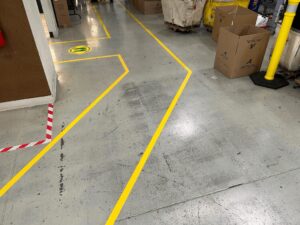
Yellow is one of the most common warehouse floor marking colors and is generally used to indicate caution and traffic flow.
Yellow markings often identify:
- Pedestrian walkways
- Forklift lanes
- Traffic aisles
- Work zones
- General caution areas
In many facilities, yellow lines create visual boundaries that help separate vehicles, equipment, and employees moving through the warehouse.
Because yellow naturally attracts attention, it’s ideal for guiding traffic and helping workers stay aware of their surroundings.
Red Floor Markings
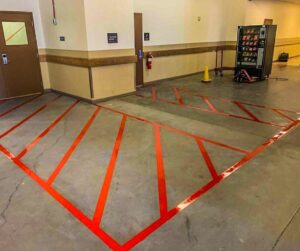 Red markings are associated with danger, fire protection equipment, and emergency situations.
Red floor markings may indicate:
- Fire extinguisher locations
- Fire hose stations
- Emergency shut-off equipment
- Hazardous areas
- Emergency stop zones
OSHA commonly associates red with fire safety and emergency protection equipment, making it one of the most important colors in industrial facilities.
Red markings are intended to stand out immediately and signal that an area or piece of equipment requires urgent attention or must remain accessible at all times.
Green Floor Markings
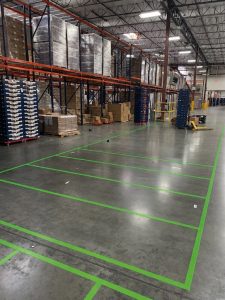 Green markings are generally used to designate safety-related equipment or safe conditions.
These areas may include:
- Emergency exits
- First aid stations
- Safety equipment storage
- Eyewash stations
- Safe walking paths
Green is commonly associated with safety and emergency assistance, helping employees quickly locate important resources during an emergency.
In larger warehouses or manufacturing facilities, green markings can improve response times and help workers navigate evacuation routes more efficiently.
Blue Floor Markings
 Blue floor markings are often used for informational purposes or to designate specific operational areas.
Blue markings may identify:
- Equipment storage areas
- Raw material staging areas
- Work-in-progress zones
- Inspection stations
- Designated inventory sections
Unlike red or yellow, blue is usually less about hazards and more about organization and workflow management.
Facilities often use blue striping to improve efficiency and keep warehouse operations structured and consistent.
Black & Yellow Striped Markings
Black and yellow striped floor markings are used to highlight physical hazards or areas requiring extra caution.
These markings often surround:
- Machinery
- Equipment with moving parts
- Low-clearance obstacles
- Loading dock edges
- Dangerous work zones
The striped pattern increases visibility and signals workers to stay alert around potential hazards.
You’ll commonly see black and yellow striping near industrial equipment or areas where employees should use additional caution.
Red & White Striped Markings
red and white striped floor zone
Red and white striped markings typically indicate areas that must remain completely clear.
These areas may include:
- Emergency exits
- Electrical panels
- Fire safety equipment access
- Emergency response pathways
These markings help ensure workers don’t block critical access points with pallets, inventory, or equipment.
Keeping these zones unobstructed is important for both OSHA compliance and workplace safety.
Black & White Floor Markings
black and white warehouse striping
Black and white floor markings are often used for housekeeping and operational boundaries.
These markings may identify:
- Storage zones
- Equipment placement areas
- Workstations
- Non-hazardous operational areas
Black and white striping helps facilities stay organized without implying immediate danger or emergency conditions.
Many warehouses use black and white markings to improve consistency and maintain cleaner workflows throughout the building.
OSHA Floor Marking Standards & Consistency
While OSHA provides general guidance for workplace safety markings, facilities often customize their warehouse striping systems based on their operations and workflow. The most important thing is consistency. Employees should be able to quickly recognize what each color means within the facility. Clear signage, employee training, and visible floor markings all work together to create a safer warehouse environment.
Warehouse Floor Marking Colors Are for More Than Organization
From yellow traffic lanes and red emergency zones to green safety areas and black-and-yellow hazard markings, these colors help warehouses operate safely and efficiently every day.
Clear floor striping can improve workflow, reduce accidents, support OSHA compliance, and make industrial environments easier to navigate for employees, forklift operators, and visitors alike.
Whether you manage a warehouse, distribution center, manufacturing facility, or industrial workspace in Arizona, understanding warehouse floor marking colors is an important part of maintaining a safe and organized operation.


Comments are closed